
- New
Unitaid & Nikkiso: Building Sustainable Oxygen Access in East Africa through Public-Private Partnerships
In 2025, Unitaidーa global health agency hosted by the World Health Organization (WHO)ーpartnered with the Government of Japan, Nikkiso, alongside the Governments of Kenya and Tanzania, to tackle an overlooked challenge: closing the gap in access to medical-grade oxygen.
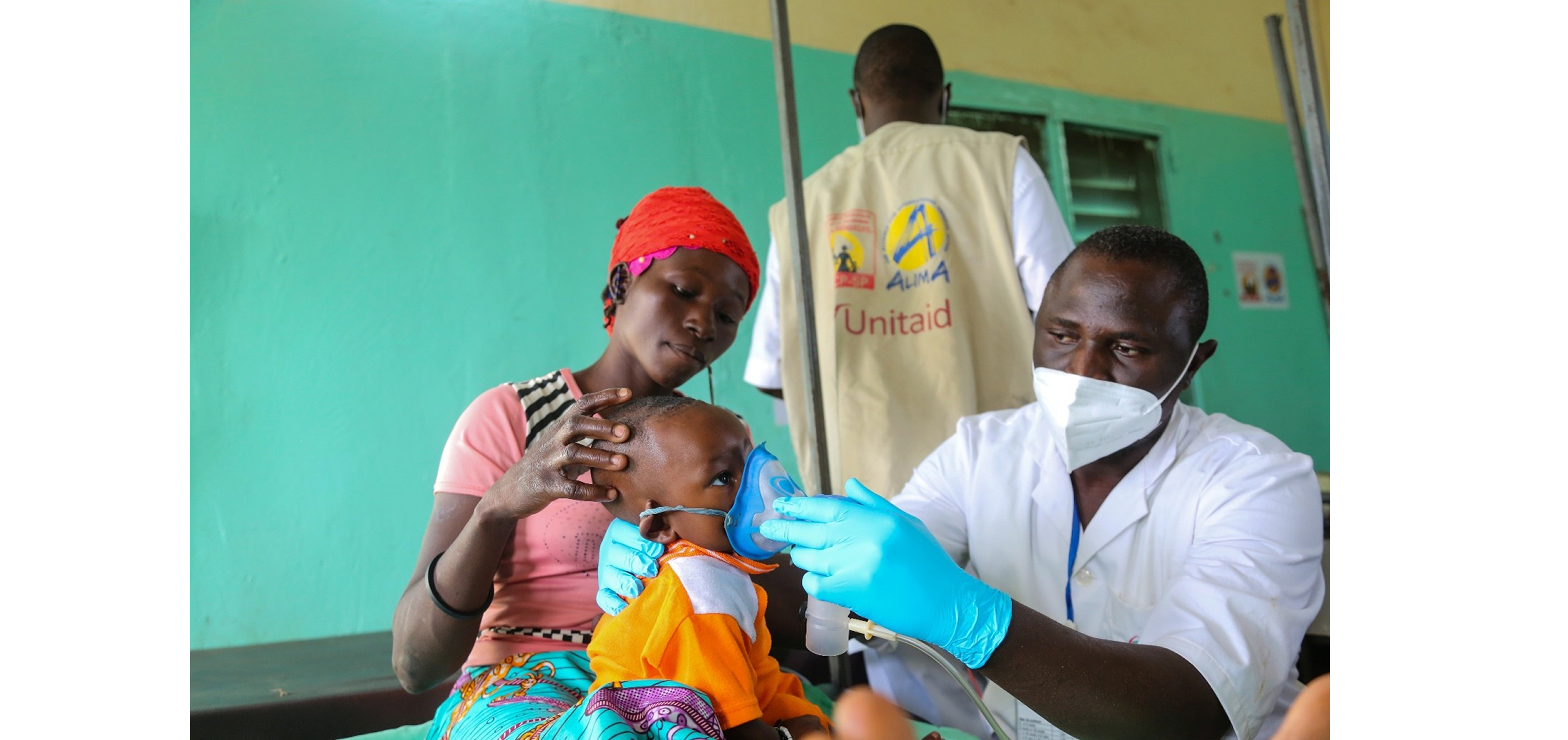
© Seyba Keita/ALIMA
The Problem
Medical-grade oxygen is a non-substitutable essential medicine used not only for respiratory diseases, but also for advanced HIV infections, severe tuberculosis and malaria, obstetric and neonatal emergencies, and surgery and trauma care. During the COVID-19 pandemic, oxygen shortages revealed how criticalーand how undervaluedーthis essential medical commodity had been in health systems around the world.
Across much of sub-Saharan Africa, COVID-19 exposed a long-standing oxygen under-resourcing problem, driven by limited production capacity, constrained maintenance expertise, and weak "last-mile" logistics. In some settings, hospitals have historically been able to access less than 10% of the oxygen they need, leaving patients at serious risk.
The Solution: A Cross-Country Hub-and-Spoke Model on LOX
To address these challenges, Unitaid orchestrated a partnership to expand regional production of medical-grade liquid oxygen (LOX) and improve distribution at scaleーso that supply can reliably meet health-system demand across Kenya, Tanzania, and neighboring countries. The initiative supports three locally operated production hubs in Mombasa and Nairobi (Kenya) and Dar es Salaam (Tanzania), aiming to triple regional oxygen production and reduce oxygen costs by up to 27% by strengthening supply and fostering competition.
Beyond the benefits of centralization, the model is grounded in the intrinsic advantages of medical‑grade liquid oxygen (LOX) produced by large air‑separation units (ASUs) over gaseous oxygen generated on‑site through small pressure swing adsorption (PSA) plants. LOX can be stored in large cryogenic bulk tanks, providing a reliable buffer during emergencies and sudden demand surges. At scale, it is more space‑ and energy‑efficient: PSA systems require continuous electricity and complex maintenance at each facility, while LOX supply reduces on‑site infrastructure and delivers unit costs estimated to be around 20% lower. In addition, LOX offers more consistent purity (around 99.5%) and greater operational reliability, making it well suited for regional, cross‑border oxygen supply.
To ensure efficient distribution, the program uses a hub-and-spoke model: large Air-Separation Units (ASUs) produce bulk LOX in Mombasa, Nairobi and Dar es Salaam, which serve as centralized hubs. Here, the LOX is stored in large cryogenic storage tanks ("bulk tanks"), then transported to hospitals and facilities across the region. At facilities, LOX is converted into gaseous oxygen and supplied through piped systems to patients. This model offers significant advantages over decentralized approaches, because it simplifies maintenance by concentrating complex oxygen production equipment in fewer locations. In this case, it allows for regional distribution, ensuring that even underserved areas and neighboring countries like Malawi, Mozambique, Uganda and Zambia have reliable, state-of-the-art supplyーsomething difficult to be achieved with smaller, fragmented systems.
Implementation: Building Local Capacity through a Global Partnership
Building local capacity through a global partnership has been central to the success of this initiative, combining international technical expertise with regional manufacturing capabilities to create a sustainable oxygen ecosystem. The technology partner Nikkiso brought decades of experience in small-to-medium scale cryogenic ASUs and modular plant design. In practice, modularization means that most equipment is factory-assembled, shipped in a small number of containers, and installed on-site, reducing complexity and providing ready-to-use equipment for hospitals and health facilities in the region.
The program anchors this technology in local manufacturers with oxygen production baselines: Hewatele (Nairobi), an established medical oxygen manufacture that has historically focused on PSA plants producing gaseous oxygen and is now expanding into LOX; Synergy Gases (Mombasa) and Tanzania Oxygen Limited (TOL) (Dar es Salaam), which are small-scale LOX producers who were looking to upgrade from dated equipment to state-of-the-art ASUs. These local partners leveraged Nikkiso's expertise to upgrade their existing oxygen production capabilities and establish state-of-the-art facilities for medical-grade liquid oxygen.
At the same time, government cooperation provides the enabling environment for scale and sustainability. National and subnational authorities (including Kenya's county governments) have integrated oxygen into universal health coverage (UHC) and primary health care (PHC) plans, ensuring oxygen is treated as a routine, budgeted input to health service delivery so that facilities can plan and pay for reliable supply over time.
Finally, blended finance underpinned this program: Unitaid's model blends grants for technical assistance and demand forecasting with risk-sharing instruments such as volume guarantees from MedAccess, while also catalyzing additional debt and equity financing mobilized directly by the three participating manufacturers to expand their production and distribution capacity. A volume guarantee reduces demand risk by assuring suppliers that a minimum quantity will be purchased at agreed terms, enabling investment in production and distribution while supporting stable pricing for public systems. The Government of Japan's US$7.3 million contribution helped catalyze implementation and signaled public commitment to regional oxygen capacity-building.
Impact and Outcomes
The current implementation trajectory targets commissioning of three ASUs and expanded distribution networks to reach public hospitals in Kenya and Tanzania while supplying neighboring countries. Modeled public health impact suggests the initiative could save up to 154,000 lives in Kenya and Tanzania over the next decadeーdriven by improved access, reliable quality, and affordability. Beyond lives saved, the partnership is building a sustainable local oxygen market, advancing technological know-how, fostering workforce development (biomedical engineers, plant operators, clinical staff), and building logistics capacityーfrom bulk tanks to last-mile safety protocols.
Lessons Learned: Market Building via PPPs
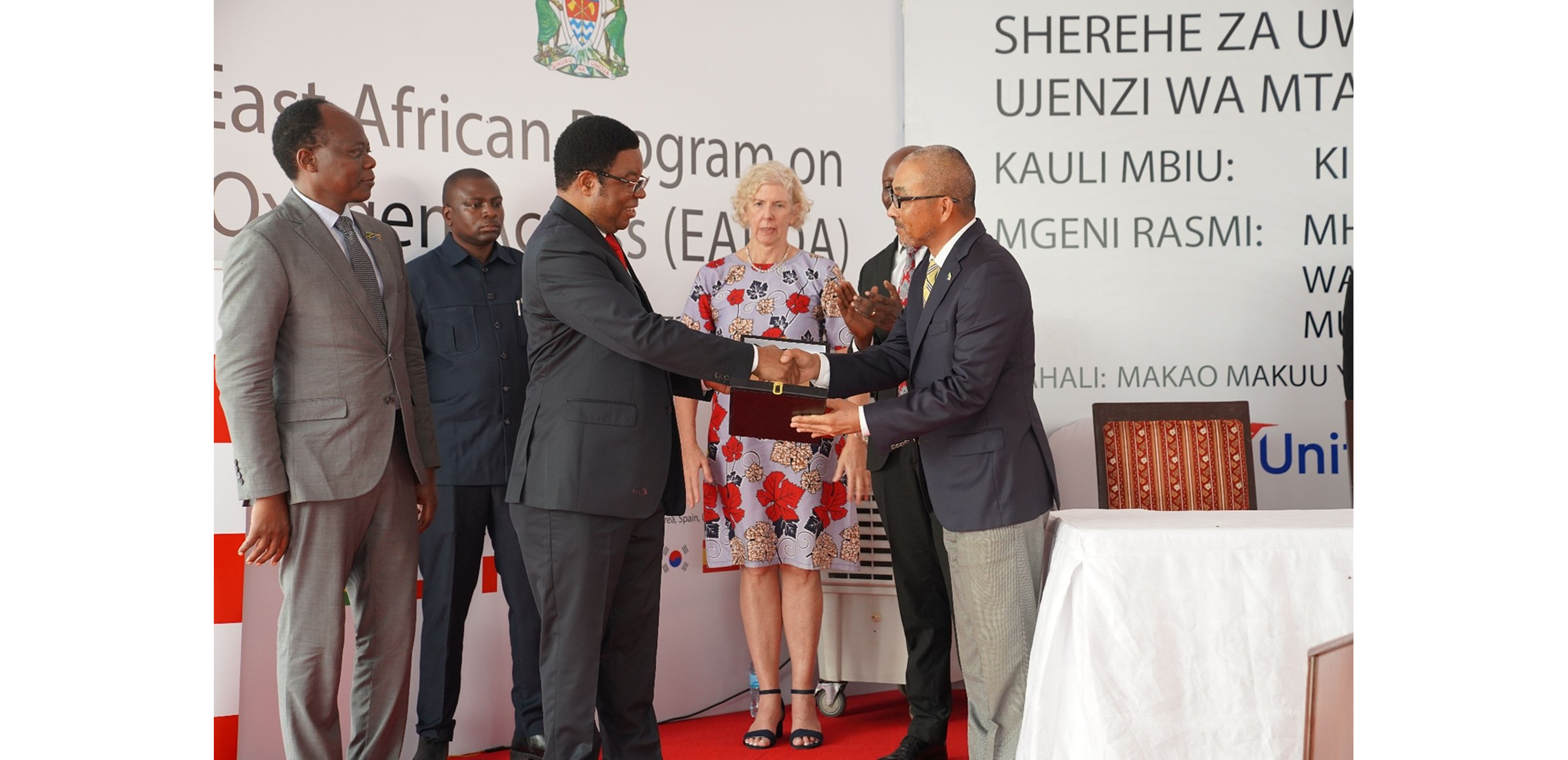
Successful implementation of the East Africa Program on Oxygen Access (EAPOA) underscores several critical lessons for market building through public-private partnerships (PPPs). Through them, blended finance can strengthen long-term viability and bring new opportunities that only the private sector can leverage, as Dr. Robert Matiru explains:
"What is excitingーand complexーabout building regional liquid medical oxygen production in East Africaーand even as we aim to replicate it elsewhereーis that we need more public-private partnerships that harness the power and capabilities of the private sector to advance universal health coverage, but in a way that attracts the private sector. Companies need profit to run a successful business. When companies understand the business benefits of partnering, they are eager to work together in PPPs. That's what we have here. In this partnership, the local companies have been incentivized by Unitaid and its partners, to make medical-grade liquid oxygen to meet the requirements of quality, affordability, and volume required by the public sector. At the same time, air separation units also produce other gasesーnitrogen, argon and carbon dioxideーthat can be sold commercially. This mixed model helps strengthen the business caseーsupporting reliable supply to government facilities while sustaining operations through diversified revenue."
ーDr. Robert Matiru, Director of Programmes, Unitaid
Blueprint for Future Health Investments
The Unitaid-Nikkiso partnership demonstrates how public-private partnerships and blended finance, paired with clear impact goals, can transform access to a life-saving essential medicine. By building locally owned and operated medical-grade LOX production capabilities and strengthening regional distribution, Unitaid offers a replicable model for how international capital and technical expertise can help strengthen and sustain local public health resilience.